As of 13 May 2026. Updated following the Federal Budget delivered 12 May 2026.
If permanent residency in Australia is your goal, one number runs almost everything: your points score. It determines whether you can even submit an Expression of Interest. It determines whether you get invited to apply. And increasingly in 2026, it determines how long you wait.
On 12 May 2026, the Australian Government confirmed in the Federal Budget that the points test — the system used to select almost two-thirds of all permanent skilled migrants — will be "optimised." The last major overhaul was in 2012. This is the biggest shift to the system in over a decade, and it is coming.
Here is everything you need to know: how the current system works, what is being proposed, what the government has actually confirmed, and — most importantly — what to do right now if you are building toward PR.
How the Points Test Works Right Now
Before we get into what is changing, let us make sure the current system is crystal clear — because a lot of people get this wrong, and getting it wrong costs years.
The points test applies to three skilled migration visa pathways:
- Subclass 189 — Skilled Independent visa (no employer or state required)
- Subclass 190 — Skilled Nominated visa (requires a state or territory government nomination)
- Subclass 491 — Skilled Work Regional visa (requires a state/territory nomination or eligible family sponsor; leads to PR via subclass 191)
To submit an Expression of Interest (EOI) through SkillSelect, you need a minimum of 65 points. But here is the thing most people discover the hard way: 65 points is the legal minimum to enter the pool, not the score that gets you invited. In 2026, most successful applicants have 80 to 100+ points depending on their occupation — with popular occupations like accountants and ICT business analysts regularly clearing 95–100 points before receiving an invitation.
The Full Current Points Table (As of May 2026)
This is the official scoring table as published by the Department of Home Affairs, verified as current.
🎂 Age
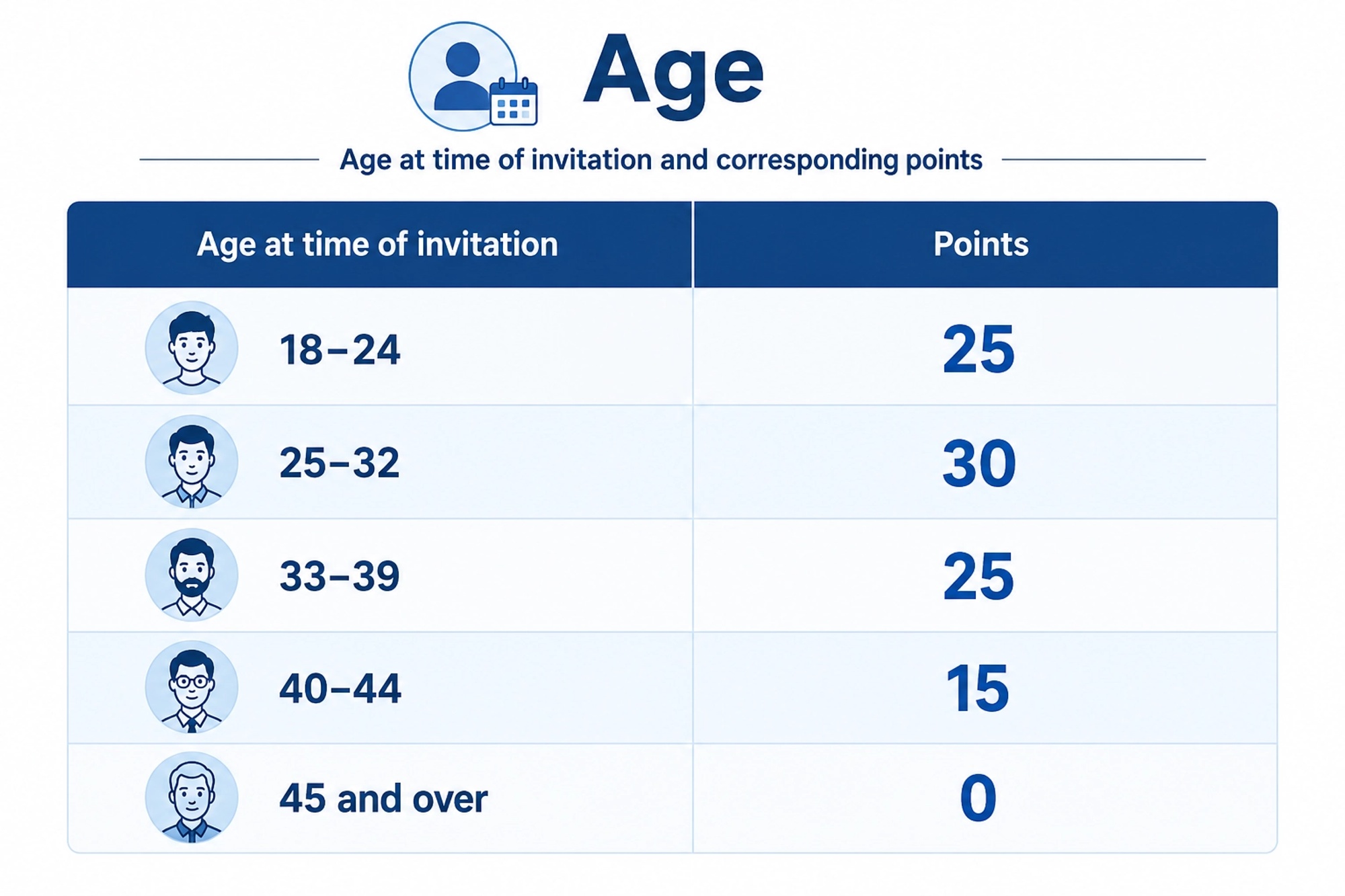
Age is assessed at the time you are invited to apply — not when you submit your EOI. This is critical. If your birthday will push you into a lower age bracket before the next invitation round, that matters enormously to your strategy.
🗣️ English Language Proficiency
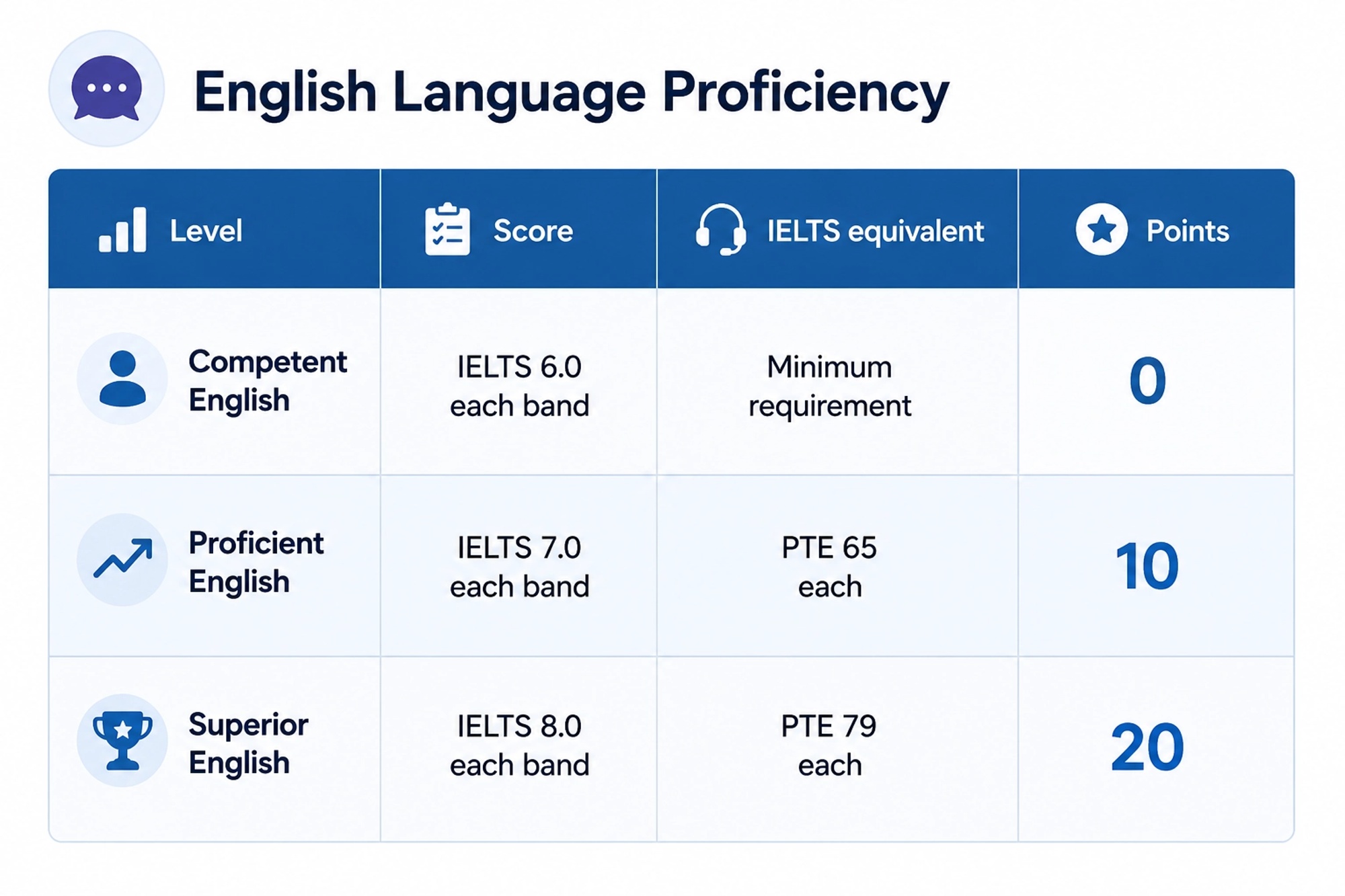
English is the fastest and most cost-effective points lever for most applicants. Moving from Competent to Proficient adds 10 points. From Proficient to Superior adds another 10. That is 20 points — achievable through targeted preparation over a few months.
Note: Your English test must have been taken within three years of your invitation. If you have an older test, plan your retake carefully so the result is still valid when invitations arrive.
💼 Work Experience — Overseas & in Australia
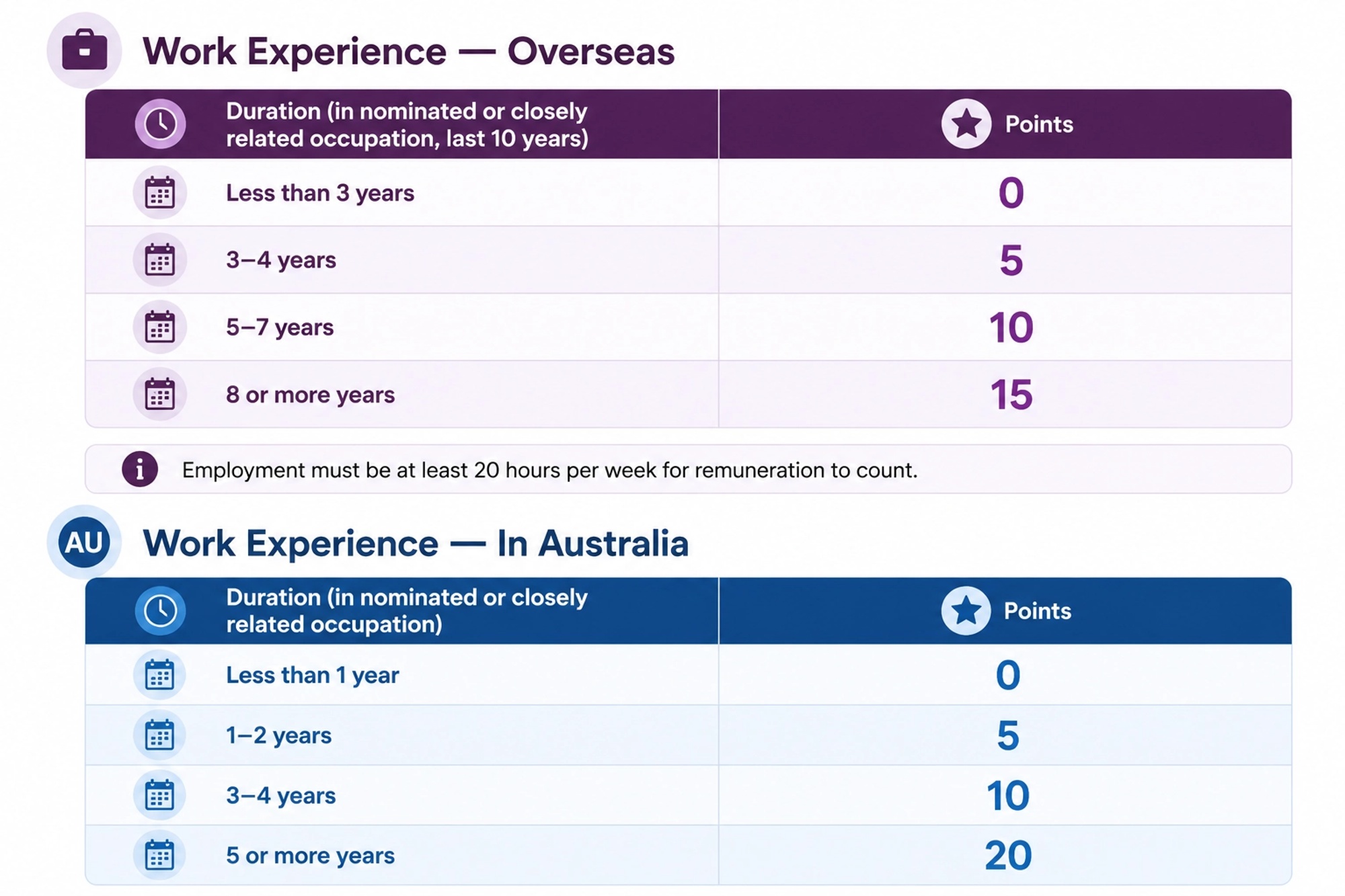
Important cap: The combined total of overseas and Australian work experience points cannot exceed 20 points. Even if you score more in theory, the maximum awarded is 20.
🎓 Educational Qualifications & Australian Study Bonus
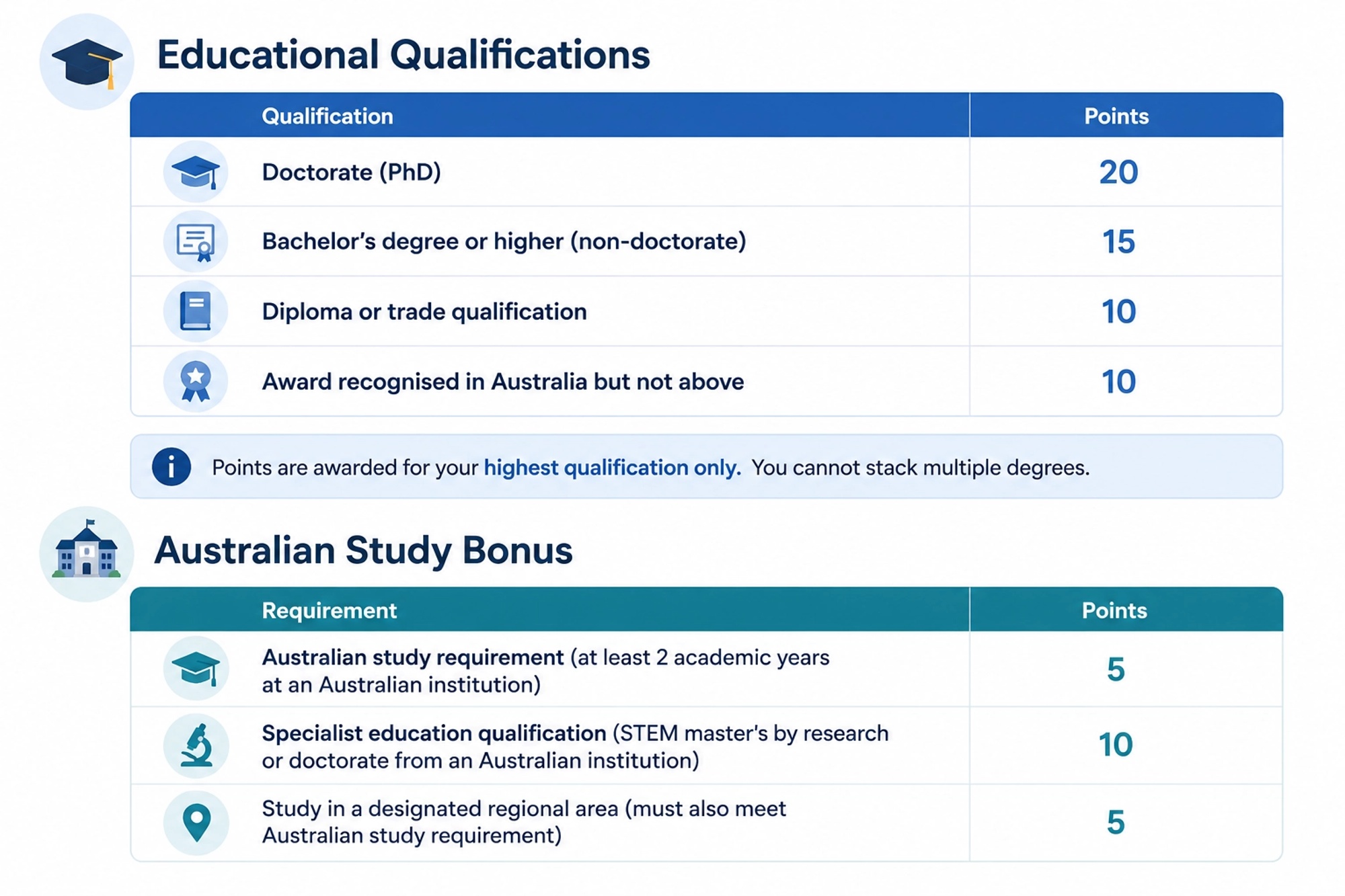
Important: These categories can be combined — for example, a STEM PhD from a regional Australian university could earn 5 (Australian study) + 10 (specialist education) + 5 (regional study) = 20 bonus points. This is why Australian study pathways have been so strategically popular.
🌏 Community Language — NAATI
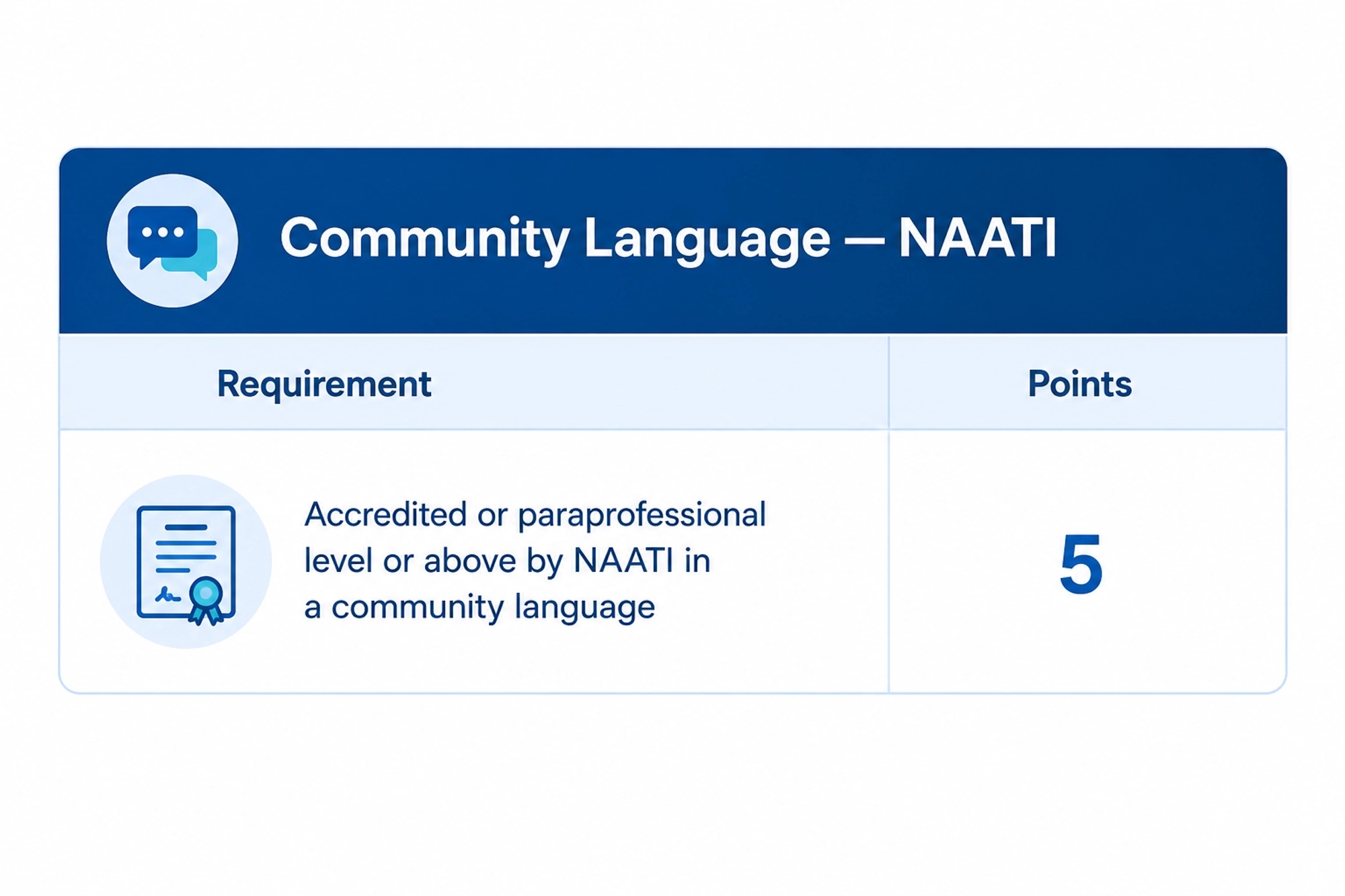
The NAATI (National Accreditation Authority for Translators and Interpreters) credential awards 5 relatively accessible points if you speak a community language fluently. Languages commonly tested include Hindi, Punjabi, Urdu, Nepali, Sinhala, Tamil, Mandarin, Cantonese, Vietnamese, Arabic, and many others. This is consistently one of the highest-value effort-to-points strategies for many applicants.
👫 Partner Criteria
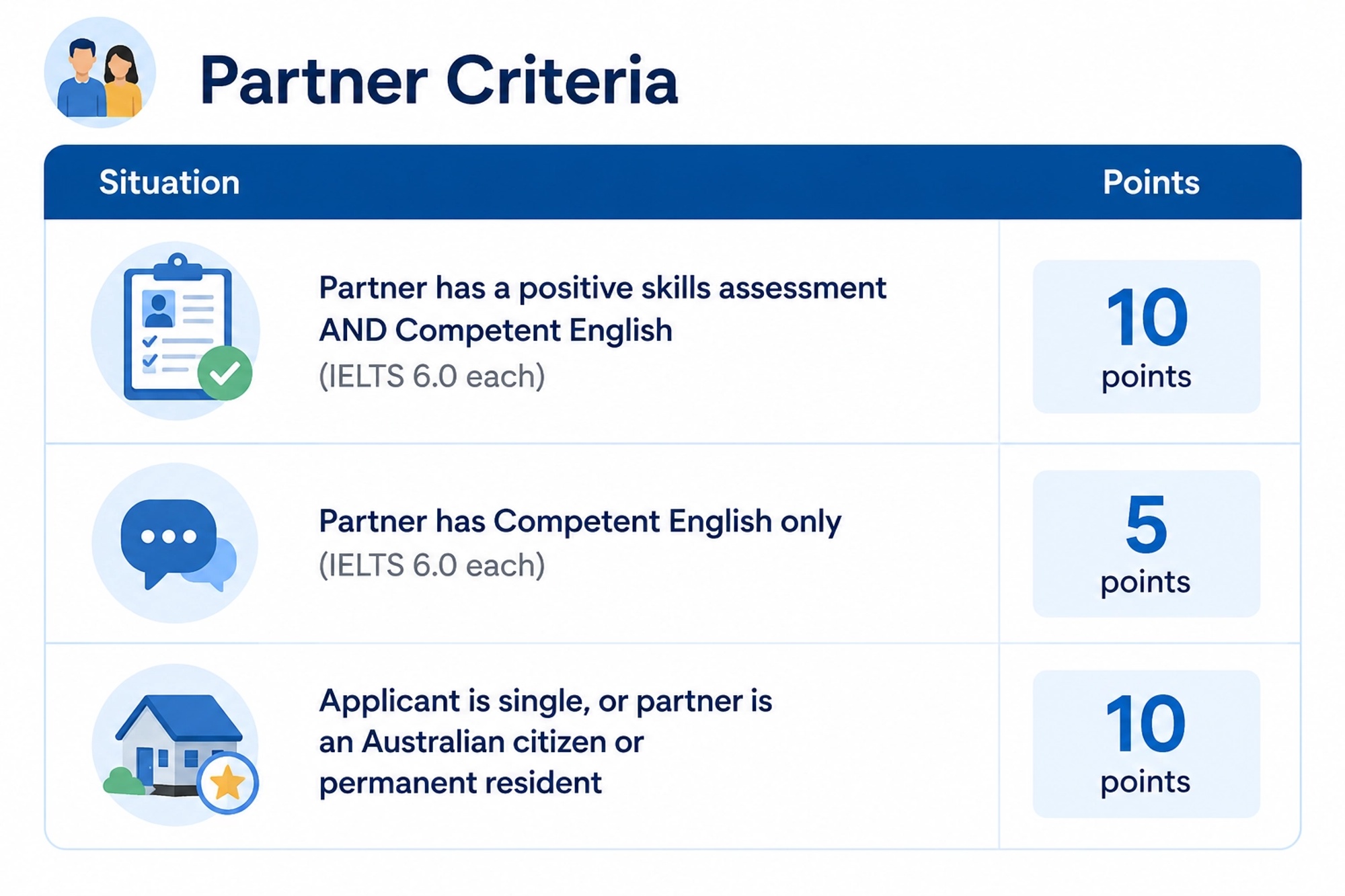
If you are partnered and neither of you is Australian, your partner's English and skills assessment contribute to your score. If you are single — or your partner is already an Australian PR or citizen — you automatically receive 10 points.
📍 State and Regional Nomination Bonus
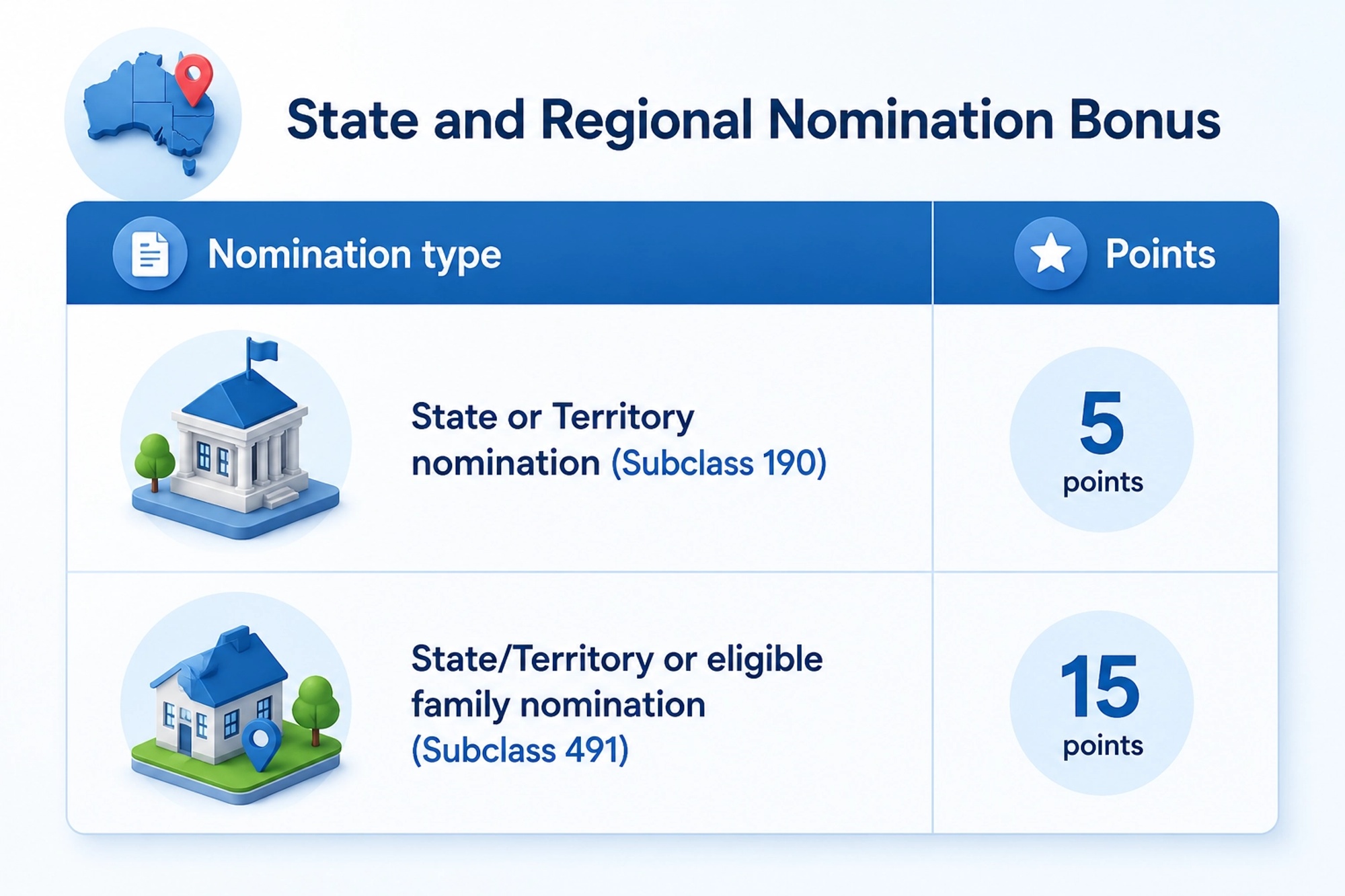
This is where the 491 visa becomes very powerful for applicants who are not hitting competitive scores on the 189. An additional 15 points through regional nomination can transform a borderline 189 candidate into a highly competitive 491 applicant.
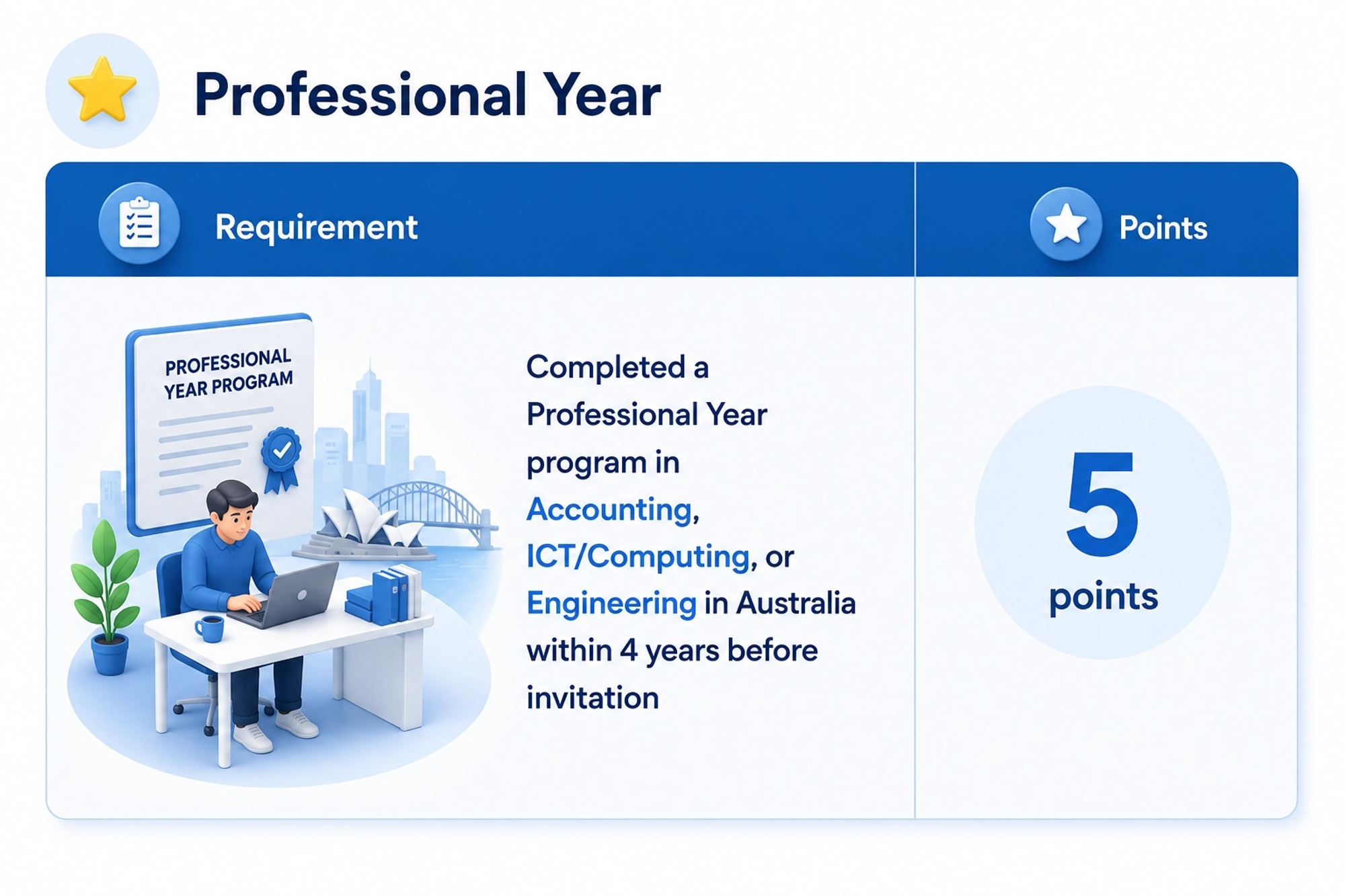
What Does "Competitive" Actually Mean in 2026?
Here is the honest reality that most guides gloss over:
- Subclass 189 (Independent): The minimum is 65 points, but most invitations go to applicants scoring 90–100+ points for popular occupations. Healthcare workers sometimes receive invitations at 75–80. Accountants and ICT professionals routinely need 95–100+.
- Subclass 190 (State Nominated): With the 5-point state nomination bonus, realistic competitive range is 75–90 points.
- Subclass 491 (Regional): With the 15-point regional bonus, realistic competitive range is 65–80 base points before the bonus. This is the most accessible pathway for applicants with lower base scores.
The gap between 65 (minimum) and 90 (competitive for many occupations) is what catches most PR applicants off guard when they first calculate their score.
SettleMate's Tip: SettleMate recommends that every skilled migrant planning a PR pathway calculate their current points score honestly — then identify the two or three highest-leverage improvements available. For most people, English score improvement is the most impactful change possible: going from Competent (0 points) to Superior English (20 points) is a 20-point jump achievable in a matter of months. That single move can be the difference between waiting years for an invitation and receiving one quickly.
What the Government Has Confirmed: The Points Test Is Being Overhauled
Here is what is officially confirmed as of the 2026–27 Federal Budget:
The government will "optimise" the points test to select "better educated", "higher-skilled", and younger migrants. The Department of Home Affairs will publish a draft new test later in 2026 for consultation before any final changes are legislated.
What is NOT yet confirmed: the specific new point values for each category, the new minimum score threshold (if any), or the exact date the new system will take effect.
What the pre-budget briefings and independent analysis point to:
1. Greater weight on age — especially younger applicants
The proposed model awards significantly more points to applicants aged 21–29, reflecting research that younger migrants contribute more over their working lives. Applicants over 40 are expected to find it considerably harder to reach the threshold under a reformed system.
If you are 30–34 right now, this reform is particularly relevant to you — the window where the current system treats you generously is narrowing.
2. English proficiency becomes a critical differentiator
Superior English (IELTS 8.0 / PTE 79+) is expected to carry far greater weight than it currently does. The current 20-point maximum for Superior English could increase, making it one of the single largest scoring categories in the new system.
If you are currently sitting at Competent or Proficient English, investing time now in pushing to Superior is the most future-proof strategy regardless of what the final reform looks like.
3. Higher qualifications get more points; Australian study bonuses may be reduced
The proposed model rewards advanced qualifications — particularly research-based degrees and doctoral qualifications — more heavily than the current system. Conversely, bonus points for simply having studied in Australia (as opposed to holding a genuine high-level qualification from an Australian institution) are expected to be reduced or restructured.
The current Australian Study Requirement bonus of 5 points, and regional study bonus, have both been flagged as areas of potential reduction.
4. Possibility of salary-based points for the first time
For the first time in the system's history, earning a high salary in Australia could directly contribute to your points score. Applicants earning above the Specialist Skills Income Threshold (currently $141,210) may receive additional points. This shifts the system toward rewarding demonstrated economic contribution — what you are actually earning in Australia — rather than solely paper qualifications.
5. Minimum threshold may rise from 65 to 70 points
There are credible discussions around raising the minimum score needed to lodge an EOI from 65 to 70 points. In practice, this affects only applicants at the lower end of the scale — most competitive applicants score well above this — but it would filter more people out of the system entirely at the base level.
6. State nomination streams (190 and 491) may be restructured
One of the more controversial proposals — backed by the Grattan Institute — is to abolish the separate 190 and 491 state-nominated streams and replace them with a single national points-tested pathway. The argument is that state-nominated migration has directed too many migrants to areas based on state incentives rather than genuine labour demand.
This faces strong political resistance from state governments, particularly those in regional areas. Whether this specific change survives the consultation process is highly uncertain. But if it does proceed, it would fundamentally change the strategy for every applicant currently relying on 190 or 491 nomination pathways.
SettleMate's Tip: SettleMate's strong read on the proposed changes is this — the direction of the new system consistently rewards three things: being young, having genuinely strong English, and having high-level qualifications or a well-paid job in Australia. If you match that profile, the new system may actually work in your favour. If you are older, have only Competent English, and were relying primarily on regional study bonuses or state nomination points to get over the line, now is the time to reassess your strategy with a MARA-registered migration agent before the draft test is published.
What to Do Right Now — Your Action Plan
The draft points test is expected to be published by the Department of Home Affairs later in 2026. Here is what SettleMate recommends doing in the meantime:
✅ Action 1: Calculate your score under the current system today
Use the official SkillSelect points estimator at immi.homeaffairs.gov.au or a MARA-verified calculator. Know exactly where you stand right now — before any changes take effect.
✅ Action 2: Improve your English score now if you can
If you are not yet at Superior English (IELTS 8.0 each band / PTE 79+ each), this is your single highest-leverage action. Every indication is that the new system will reward Superior English more heavily, not less. Improving your English now protects you regardless of which direction the reform goes.
✅ Action 3: Get your skills assessment started immediately
Skills assessments from recognised assessing authorities (Engineers Australia, VETASSESS, ACS, AICD, etc.) take time. If you have not started yours, start now. You need a positive skills assessment before you can lodge an EOI — and faster skills recognition reforms do not apply to the General Skilled Migration pathway.
✅ Action 4: Consider lodging your EOI if you currently meet 65 points
If you already meet the current 65-point threshold and your occupation is on the eligible list, there is a strategic argument for lodging your EOI under the current system rather than waiting for reforms that may raise the minimum threshold or change category weightings against you.
An EOI is not a visa application — there is no government fee to submit one, and it does not expire. But it locks in your score and queue position under the current rules.
✅ Action 5: Explore the NAATI community language credential
If you speak a community language, the NAATI accreditation is 5 points at relatively low cost and effort compared to alternatives. Languages include Hindi, Punjabi, Urdu, Nepali, Sinhala, Tamil, Mandarin, Cantonese, Vietnamese, Arabic, and more. Check naati.com.au for current test languages and booking information.
✅ Action 6: Consider the 190 or 491 pathway if 189 is not realistic right now
If your score is not currently competitive for the 189, the 190 (5 extra points) or 491 (15 extra points) may be your most practical option. State nomination requirements, available occupations, and state-specific processing times vary — check the relevant state government immigration website for the state you are living or working in.
✅ Action 7: Speak to a MARA-registered migration agent before the draft is published
The points test reform is live and real, but the final detail is not yet available. A registered migration agent (MARA agent) can model your score under multiple scenarios — current and proposed — and help you decide whether to act now or wait. This is not a decision to make based on general blog advice alone.
SettleMate's Take
The points test reform has been coming for a long time — the discussion paper was published back in April 2024 and received 204 public submissions. The 2026–27 Budget has now confirmed it is happening. But "happening" and "legislated" are different things. The draft test will be published for consultation later in 2026. Then it needs to pass Parliament. The final shape of the reforms could look different from what is being briefed now.
What SettleMate is confident about: the direction is clear and consistent. Australia wants younger migrants with genuinely strong English and high-level qualifications who are already working and earning here. If that is you, the new system may make things easier. If your current strategy relies heavily on Australian study bonuses, regional pathways, or lower English scores, now is the time to stress-test your plan.
SettleMate will publish a full updated analysis the moment the Department of Home Affairs releases the draft test for consultation. Watch this space.
Frequently Asked Questions
Q: What is the minimum points score needed to apply for Australian PR? The current minimum to submit an Expression of Interest (EOI) is 65 points. However, in practice, most successful invitations for the Subclass 189 visa go to applicants scoring 85–100+ points depending on the occupation. The 190 (state nomination) and 491 (regional nomination) add 5 and 15 bonus points respectively.
Q: Has the points test changed yet following the 2026 budget? No. As of 13 May 2026, the points test has not been legislated to change. The government confirmed in the 2026–27 Federal Budget that it will "optimise" the test, and a draft new test is expected later in 2026. Until legislation passes, the current scoring table remains in force.
Q: What changes are being proposed to the points test? Based on pre-budget briefings and independent analysis, the proposed direction includes: greater weight on younger applicants (under 30), higher points for Superior English proficiency, stronger weighting for advanced qualifications and salary levels, possible introduction of income-based points, reduced emphasis on Australian study bonuses, and a possible rise in the minimum EOI threshold from 65 to 70 points. None of these have been legislated yet.
Q: Should I lodge my EOI now before the test changes? If you currently meet the 65-point threshold and your occupation is eligible, there is a reasonable strategic argument for lodging now to queue under the current rules. An EOI costs nothing to submit and does not expire. Speak to a MARA-registered migration agent for personalised advice before deciding.
Q: Which visa is easiest to get with a lower points score? The Subclass 491 regional visa is the most accessible points-tested pathway because it adds 15 bonus points through state or territory nomination. An applicant with a base score of 70 effectively has 85 points on the 491 — competitive for most occupations. The trade-off is that you must live and work in a designated regional area.
Q: How much does English score improvement help? Enormously. Moving from Competent English (IELTS 6.0 each band, 0 points) to Superior English (IELTS 8.0 each band, 20 points) adds 20 points to your score — the equivalent of going from the 33–39 age bracket to the 25–32 bracket. It is the highest-impact single improvement most applicants can make.
Q: What is NAATI and how does it help my PR application? NAATI (National Accreditation Authority for Translators and Interpreters) awards 5 bonus points in the points test for holding an accredited credential at paraprofessional level or above in a recognised community language. If you speak Hindi, Punjabi, Nepali, Urdu, Tamil, Mandarin, Vietnamese, or another community language, this is one of the most efficient ways to add 5 points. Check naati.com.au for currently offered languages and test information.
Q: Will state nomination (190 and 491) still exist under the new system? This is uncertain. One proposal backed by the Grattan Institute would abolish the 190 and 491 state-nominated streams and replace them with a single national points pathway. This faces significant political resistance from state governments. No decision has been announced as of May 2026, and the government's consultation process will determine the outcome.
Q: Where can I find official information on the points test? The official points table is published by the Department of Home Affairs at immi.homeaffairs.gov.au/visas/getting-a-visa/visa-listing/skilled-independent-189/points-table. The review discussion paper is at homeaffairs.gov.au/reports-and-publications/submissions-and-discussion-papers/review-of-the-points-test-discussion-paper.
📌 Official & Trusted Resources
This article is informed by:
- Department of Home Affairs — Points table for Subclass 189: immi.homeaffairs.gov.au
- Department of Home Affairs — Review of the points test discussion paper: homeaffairs.gov.au
- Australian Federal Budget 2026–27 migration papers: budget.gov.au
- VisaHQ — Budget pre-briefing: visahq.com
- First Migration Service Centre — Points test overhaul analysis: firstmigrationservice.com
- One Planet Migration Law — Proposed changes analysis: oneplanetmigrationlaw.com.au
Disclaimer
This article is for general informational purposes only and does not constitute legal or migration advice. SettleMate is not a registered migration agent. Current points table information is correct as of May 2026 per the Department of Home Affairs. Proposed changes are based on government briefings and independent analysis — they have not been legislated. Always consult a MARA-registered migration agent for personalised advice on your PR pathway.
Sharing & Usage
This blog is original content created by SettleMate. You are welcome to share, link to, or quote this for personal, educational, or non-commercial purposes, provided SettleMate is clearly credited as the source.
© SettleMate. All rights reserved. settlemate.au
Made with ❤️ for immigrants in Australia