Guide
Renting in Australia: Bonds, Leases, and What You Must Know Before Signing
Australia's rental market is competitive, the rules are different from most countries, and new migrants are frequently caught off guard by bonds, condition reports, lease terms, and tenant rights that vary by state. This guide walks you through everything you need to know before you sign a single document — from how much a bond costs and who actually holds it, to your rights as a tenant, how rent increases work, and how to protect yourself from the rental scams that specifically target new arrivals.
- All migrants, international students, and visa holders renting in Australia for the first time
- Subclass 500 — International Students
- Subclass 482 — Temporary Skill Shortage workers
- Subclass 485 — Graduate Temporary visa holders
- Subclass 189 / 190 / 491 — Skilled visa holders (permanent and provisional)
- Subclass 417 / 462 — Working Holiday Makers
- Anyone searching for private rental accommodation in Sydney, Melbourne, Brisbane, Perth, or Adelaide
About SettleMate
SettleMate is an Australian settlement platform that helps new migrants, international students, and visa holders move, settle, and become financially compliant in Australia through step-by-step guides, practical checklists, and access to registered Australian tax professionals.
This guide is part of SettleMate’s official settlement resources, created using real migrant experiences and up-to-date Australian government requirements.
- Valid passport and visa grant notice
- Australian bank account with sufficient funds for bond and rent in advance
- Proof of income or financial capacity (bank statements, employment contract, or letter from university/sponsor)
- Australian mobile number and email address
- Photo ID (passport)
- Two references — personal or professional
Housing is usually the single biggest stress point of the first few months in Australia and for good reason. The rental market in most Australian cities is competitive, the rules are genuinely unfamiliar if you've rented in another country, and the financial stakes are high from the very first day. Getting it wrong can mean losing thousands of dollars in bond disputes, signing a lease without understanding your rights, or worse, falling for a rental scam that specifically targets new arrivals.
This guide, put together by SettleMate, is your complete playbook for renting in Australia. It covers everything from how the bond system works and which government body holds your money, to how to read a lease agreement, what a condition report is and why it matters enormously, how rent increases work under state law, and the specific red flags that signal a scam. Whether you're still searching from overseas or you've just landed and need a place urgently — this guide will help you rent confidently and protect your money.
📋 What This Guide Covers

Here is what we will cover in this guide:
- The Australian rental market — what to expect as a new migrant
- Types of rental accommodation — private rental vs share house
- Where to search for rentals in Australia
- The rental application — what you need and how to stand out
- The bond — what it is, how much, and who holds it
- Rent in advance — what you'll pay upfront
- The lease — fixed-term vs periodic, what to read before signing
- The condition report — the most important document you'll sign
- Your rights as a tenant — by state
- Rent increases — the rules every renter must know
- Breaking a lease early — what it costs
- Moving out — how to get your full bond back
- Rental scams — the red flags that target migrants
- Share houses — a practical option for first arrivals
- Money-saving tips
🏙️ STEP 1: The Australian Rental Market — What to Expect
📊 Understanding the Landscape

Australia's rental market is one of the most competitive in the world, particularly in the major capital cities. Vacancy rates in Sydney, Melbourne, Brisbane, Perth, and Adelaide have been running well below the healthy benchmark of 2–3% for several years, meaning more renters are competing for each available property. As a new migrant, you are entering this market without an Australian rental history — and that puts you at a structural disadvantage that this guide will help you overcome.
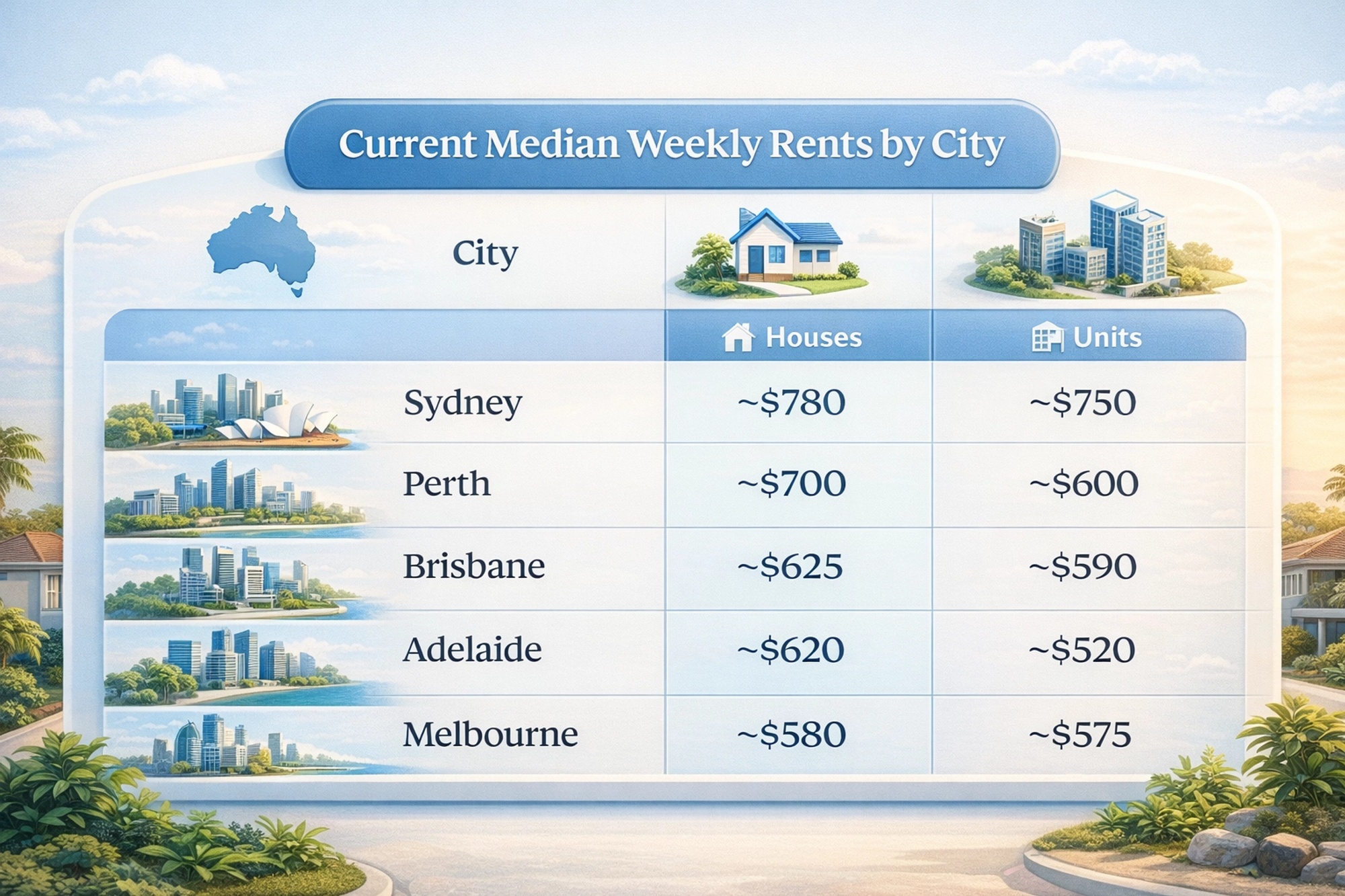
What this means for your budget: For a standard 2-bedroom unit in Sydney, you should budget approximately $750–$850 per week in rent, plus a bond of four weeks' rent ($3,000–$3,400) and two weeks' rent in advance ($1,500–$1,700) — meaning you need $4,500–$5,100 available before you receive a single key.
The 30% rule is widely used in Australia as a benchmark: your weekly rent should ideally be no more than 30% of your weekly income. At Sydney median unit rents, a single person needs to earn at least $2,500 per week (around $130,000 per year) to keep within this threshold — which is why share houses are strongly recommended for migrants in their first few months.
SettleMate's Tip: SettleMate recommends not committing to a long-term private rental in your first two weeks in Australia. Spend your first week or two in temporary accommodation — a hostel, Airbnb, or serviced apartment — while you explore different suburbs, understand commute times, and search for rentals in person. Signing a 12-month lease on a suburb you've never seen is a common and expensive mistake. The temporary accommodation cost is worth the extra time to find the right place.
🏠 STEP 2: Types of Rental Accommodation
🛏️ Your Options as a New Migrant

You have two main paths for renting in Australia: a private rental (where you and possibly a partner or family rent an entire property), or a share house (where you rent a room in a property where other housemates also live, each paying their share).
🏢 Private Rental — Entire Property
A private rental means you sign the lease and are fully responsible for the entire property including bond, all rent, and all utilities.
Best for: Couples, families, or individuals who want privacy and are financially ready for higher upfront costs.
Pros: Privacy, full control, can choose your own furniture and setup.
Cons: High upfront costs (4-week bond + 2-week advance + moving costs), more difficult application without Australian rental history, 6–12 month commitment.
🤝 Share House — Room in a Shared Property
In a share house, you rent a room in a property occupied by other housemates. You may be a co-tenant on the lease, or you may rent informally from the head tenant.
Best for: Solo migrants in their first 3–6 months, those on tighter budgets, anyone who hasn't yet found a permanent suburb.
Pros: Lower upfront costs (usually 2–4 weeks of your room's rent as bond), furnished in most cases, flexible lease terms, built-in social network, utilities often shared.
Cons: Less privacy, dependent on housemate compatibility, potentially less legal protection if you're a subtenant rather than a named tenant.
SettleMate's Tip: SettleMate recommends starting with a share house for your first three months in Australia — even if you can afford a private rental. The Australian rental market rewards local knowledge. A few months in a share house gives you time to understand which suburbs suit your lifestyle, commute, and budget before committing to a 12-month lease. The money saved on a lower bond also protects your cash flow during those first crucial settling-in weeks.
🔍 STEP 3: Where to Search for Rentals
💻 The Right Platforms and How to Use Them

✅ For Private Rentals
realestate.com.au — The largest rental listings site in Australia. Updated daily, comprehensive suburb filtering, save searches and get instant email alerts. Always start here.
Domain.com.au — The second-largest platform. Many listings appear on both sites but Domain often has slightly different stock. Use both simultaneously.
Rent.com.au — Useful supplementary platform, often lists properties not on the main two.
✅ For Share Houses and Rooms
Flatmates.com.au — The largest dedicated share house platform in Australia. Used by hundreds of thousands of renters. Create a profile, browse rooms, and message housemates directly. Essential for new arrivals.
Facebook Groups — Search "[City name] Rooms for Rent" or "[City name] Share House" for local groups. Useful but requires more caution — scams are more common here.
Gumtree — Has rental listings but is the highest-risk platform for scams. If using Gumtree, exercise extra caution and never pay without an in-person inspection.
✅ Tips for Searching Effectively
- Set up alerts immediately. Good properties in Sydney, Melbourne, and Perth go within 24–48 hours of listing. Email alerts with your exact filters are essential.
- Be ready to move fast. Have all your application documents prepared before you start attending inspections so you can apply the same day.
- Research the suburb first. Google commute times, check what supermarkets and transport are nearby, and walk the street on Google Maps before attending an inspection.
- Attend in-person inspections. Never apply for or pay a deposit on a property you have not physically inspected yourself.
SettleMate's Tip: SettleMate recommends searching realestate.com.au and Domain simultaneously, with email alerts set to your target suburb, price range, and bedroom count. Check your alerts every morning — good properties in competitive cities like Sydney and Perth are sometimes inspected and leased within 48 hours of listing. Speed of application, once you've found the right place, matters enormously.
📝 STEP 4: The Rental Application — How to Stand Out Without Australian History
📋 Building a Strong Application as a Migrant
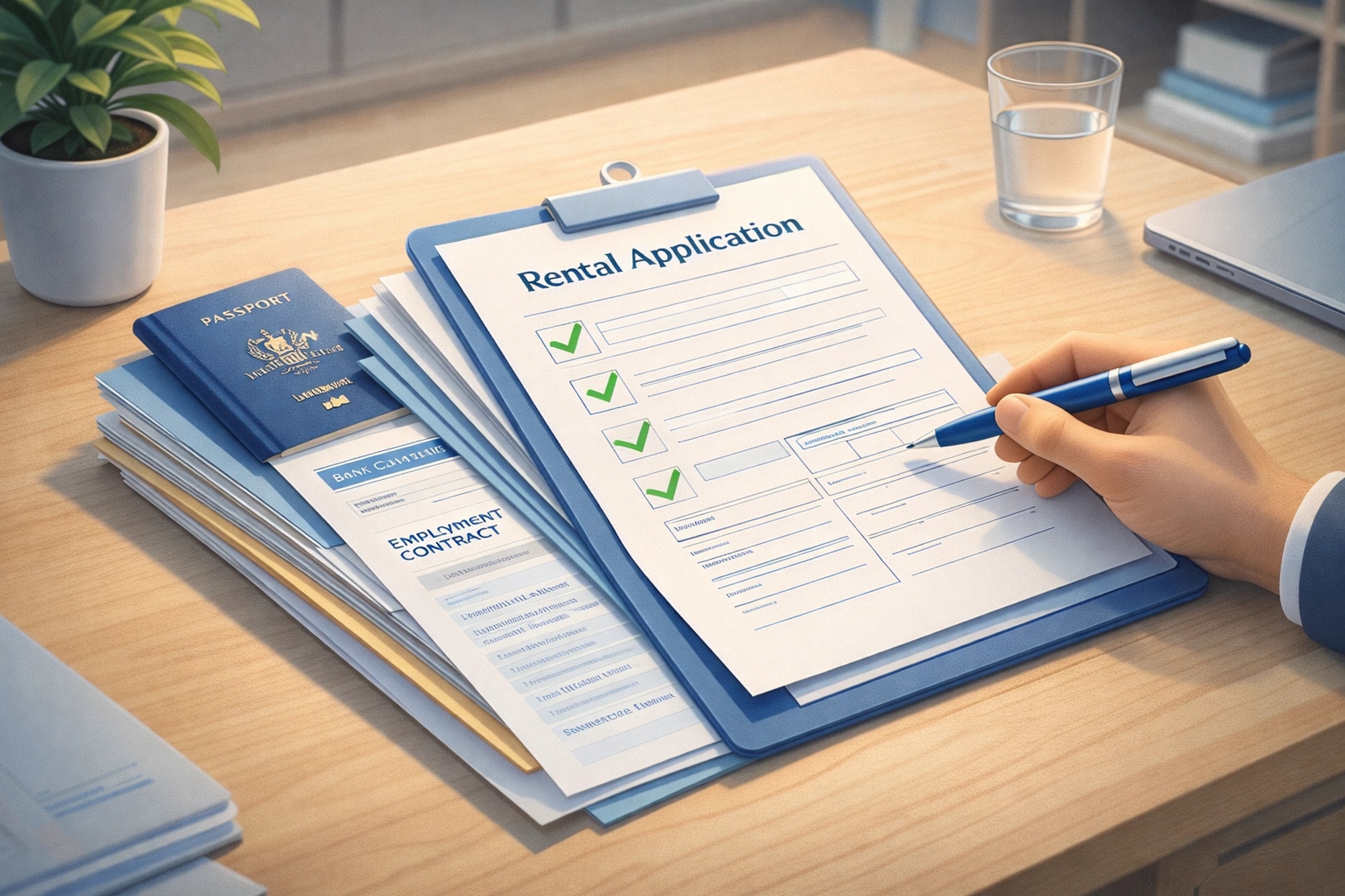
Your rental application is essentially a job application — the landlord or property manager is deciding whether to trust you with their property. The key challenge for migrants is the absence of Australian rental history, which is typically the strongest evidence of being a reliable tenant. Here's how to compensate.
✅ Documents to Prepare for Every Application
Identity:
- Passport (primary ID)
- Any secondary ID — student card, international driver's licence, or bank card
Financial capacity:
- 3 months of bank statements showing sufficient funds (in AUD if possible)
- Employment contract or letter of offer confirming your salary and start date
- For students: CoE (Confirmation of Enrolment) and evidence of parental support or scholarship if applicable
- For self-employed or contractors: client contracts or invoices
References:
- 2 references minimum — ideally one personal and one professional
- If you have an employer or university representative in Australia, a reference letter from them carries significant weight
- An international employer reference is better than no reference
Rental history (if any):
- A reference from your previous landlord or property manager — even from overseas. Have it translated into English and provide the original.
✅ Tips to Strengthen Your Application as a New Migrant
Offer to pay more rent in advance. Offering 4–8 weeks rent in advance instead of the standard 2 weeks signals financial stability and reduces the landlord's perceived risk. This is legal in Australia and commonly accepted.
Provide a cover letter. A brief, professional 1-page cover letter explaining who you are, why you've come to Australia, your employment or study situation, and why you'll be a reliable tenant is something most applicants don't include. It humanises your application significantly.
Apply through a licensed real estate agent where possible. Properties managed by licensed agents typically have cleaner processes and more transparent terms than private landlord listings.
Move fast. Submit your complete application on the same day as the inspection, or email the agent with all documents immediately after attending. Incomplete applications are deprioritised.
SettleMate's Tip: SettleMate recommends treating your rental application like a job application. A one-page cover letter introducing yourself, explaining your visa status and employment situation, confirming your financial capacity, and listing your references can be the difference between being selected and being overlooked — especially when you lack local rental history. Agents and landlords regularly tell us this kind of effort stands out in a competitive application pool.
💰 STEP 5: The Bond — What It Is, How Much, and Who Holds It
🏦 Understanding the Bond System

The rental bond (also called a security deposit) is one of the most misunderstood parts of Australian renting for new arrivals. Here is what you absolutely need to know.
✅ What the Bond Is
A rental bond is a sum of money you pay at the start of your tenancy as financial security for the landlord against unpaid rent, damage beyond fair wear and tear, or cleaning costs if you leave the property in poor condition. If you leave the property in good condition and with no outstanding rent, you get the full bond back.
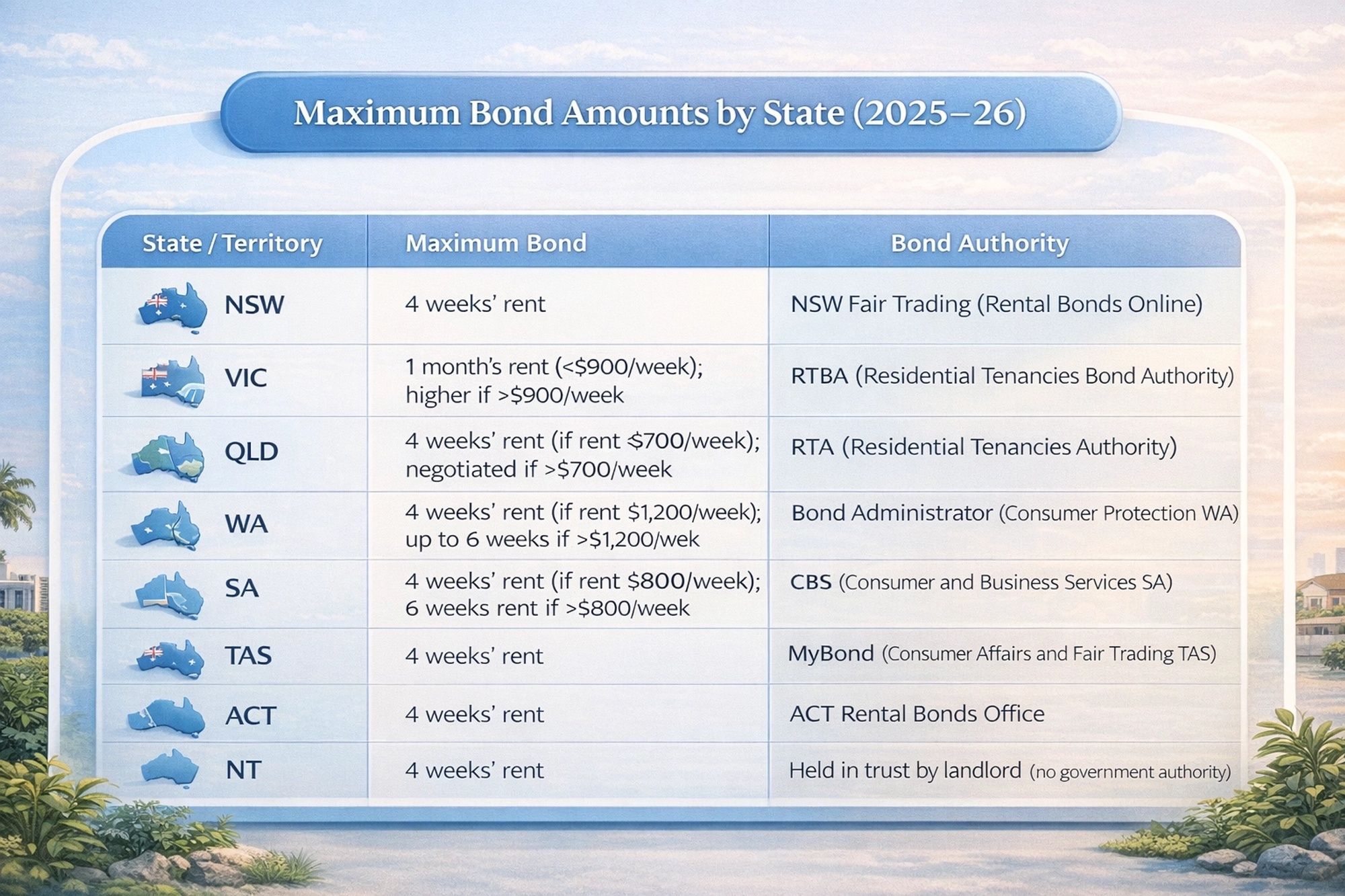
Critical rule: Your landlord does not hold your bond. In all Australian states and territories (except the Northern Territory), your bond must be lodged with the relevant government bond authority within a specified number of days of receiving it. The bond is held by the government — not the landlord or agent — for the duration of your tenancy.
✅ Bond Lodgement Rules
Your landlord or property agent is legally required to lodge your bond with the relevant state authority within a specified timeframe after receiving it:
- NSW: 14 days
- VIC: 10 business days
- QLD: 10 days
- WA: 14 days
- SA: 2 weeks (agents have 4 weeks)
- TAS: 10 working days
- ACT: 2 weeks (agents have 4 weeks)
After lodgement, you will receive a bond lodgement receipt or confirmation from the bond authority. Keep this. It is your proof that the bond is held safely and is the document you will need when claiming your bond back at the end of your tenancy.
✅ What Can the Bond Be Used For?
The landlord can make a legitimate claim on your bond only for:
- Unpaid rent
- Damage beyond fair wear and tear
- Cleaning costs if the property is left significantly dirtier than when you moved in
- Unpaid water charges (where the tenant is responsible)
The bond cannot be claimed for normal wear and tear — the gradual deterioration of a property through ordinary everyday use. Worn carpet from walking, small marks on walls from hanging pictures, or faded paint are all examples of fair wear and tear and are not deductible from your bond.
SettleMate's Tip: SettleMate recommends asking the property agent to confirm the bond lodgement reference number after your bond has been lodged. In NSW, you can verify this yourself through Rental Bonds Online. In QLD, the RTA sends a notification directly to both landlord and tenant. If you cannot confirm your bond has been lodged within the statutory timeframe, contact your state's tenancy authority immediately. An unlodged bond is an illegal one — and it is your money.
💵 STEP 6: Rent in Advance — What You Pay at the Start
📅 Upfront Rent Costs
In addition to the bond, you will be required to pay rent in advance at the start of your tenancy. The standard in Australia is two weeks' rent in advance on most private rentals. Some private landlords may request four weeks in advance, which is legal as long as it is agreed in the lease.
This means your total upfront cost when moving into a property is typically:
Bond (4 weeks) + Rent in advance (2 weeks) = 6 weeks of rent total
For a $600/week property in Brisbane, for example, this means having $3,600 ready before you receive the keys.
Additional upfront costs to budget for:
- Removalist or moving van: $300–$800 depending on distance and volume
- Utility connection fees: $50–$200 depending on providers
- Contents insurance: $300–$500/year (highly recommended)
- Internet setup: typically $60–$90/month with a connection fee of $0–$99
Important: Your rent in advance is credited against your first weeks' rent — it is not an additional cost on top of regular rent. Once you have paid it, you will not owe rent again until that advance period has expired.
📄 STEP 7: The Lease — Fixed-Term vs Periodic and What to Read
📋 Understanding Your Rental Agreement
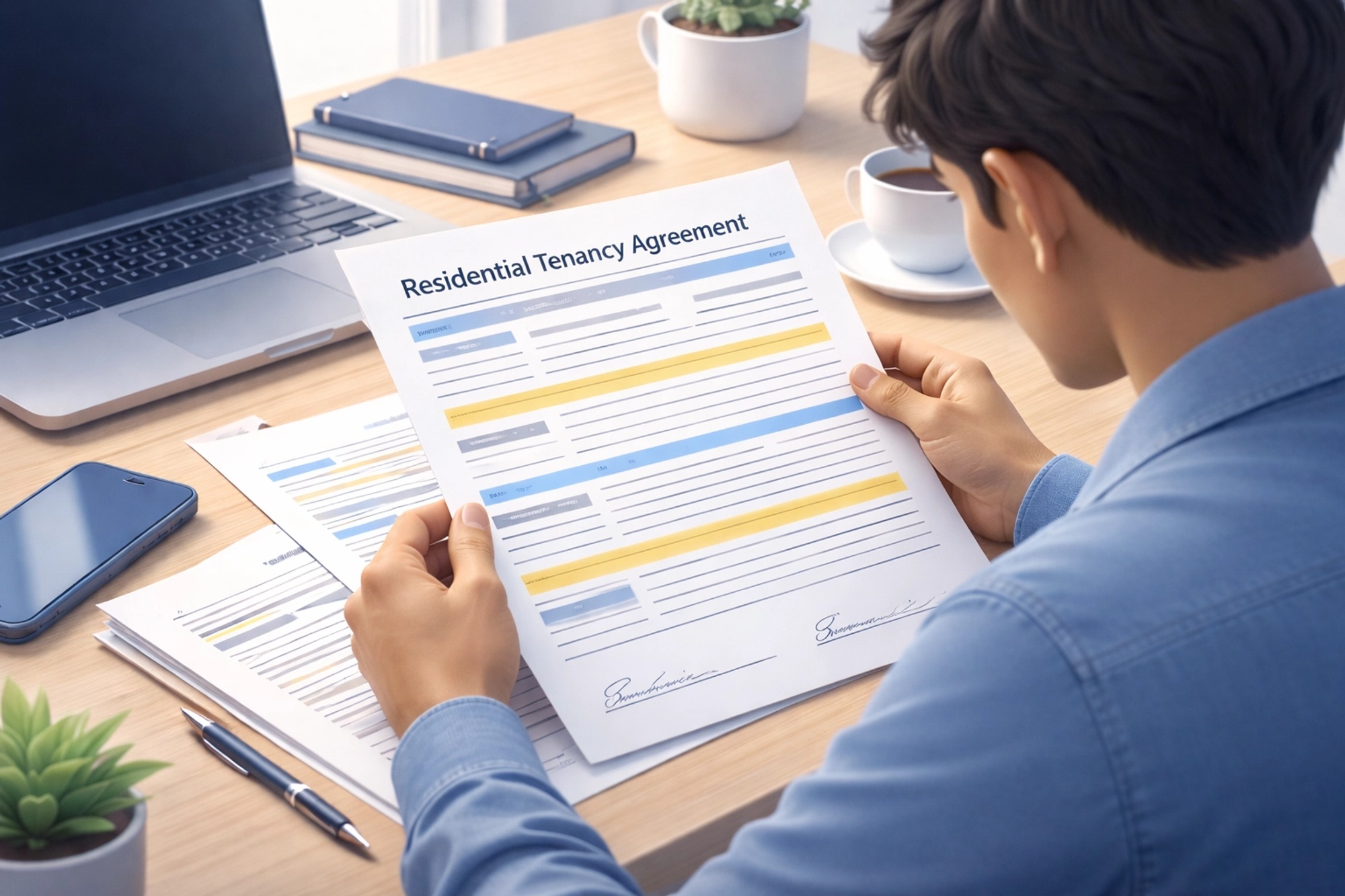
A lease (formally called a Residential Tenancy Agreement) is a legally binding contract between you and your landlord. In Australia, there are two types:
✅ Fixed-Term Lease
A fixed-term lease runs for a set period — typically 6 months or 12 months. During the fixed term, both you and the landlord are generally bound to the agreement. The landlord cannot increase your rent during a fixed-term lease unless a rent increase clause is explicitly written into the agreement with the amount or method specified.
At the end of a fixed term, if neither party ends the agreement, it automatically converts to a periodic lease.
✅ Periodic Lease (Month-to-Month)
A periodic lease has no fixed end date — it continues rolling until either party gives notice to end it. Periodic leases offer more flexibility but also less security, as the landlord can end the tenancy with appropriate notice. Rent increases are more common on periodic leases, though they are now capped at once per 12 months in most states.
✅ What to Check Before Signing Any Lease
Never sign a lease without checking these specific elements:
1. Property details — Confirm the exact address, parking arrangements, storage, and any inclusions (whitegoods, air conditioning, heating) are correctly listed.
2. Lease term and start date — Confirm the start date, end date, and what happens at the end of the fixed term.
3. Weekly rent amount — Confirm this matches what was advertised and what you agreed.
4. Bond amount — Must not exceed the legal maximum for your state.
5. Rent in advance amount — Confirm the amount and what it covers.
6. Rent increase clauses — If a rent increase is built into the agreement (only possible on fixed-term leases), the amount or calculation method must be clearly specified.
7. Pet policy — Is a pet permitted? Is there a pet bond (WA only, maximum $260)?
8. Maintenance responsibilities — Who is responsible for lawn mowing, pool maintenance, garden care?
9. Subletting policy — Are you permitted to have a subletting arrangement if needed?
10. Break lease costs — What are the financial consequences if you need to end the lease early? (See Step 11)
Standard government-approved lease templates are used in most states — if an agent or landlord presents you with a non-standard document, be cautious and ask why.
SettleMate's Tip: SettleMate strongly recommends reading the entire lease before signing — including the fine print. If anything is unclear, ask the agent to explain it in writing before you sign. Once signed, both parties are legally bound. We regularly hear from migrants who signed leases without reading them and later discovered clauses they hadn't noticed — including rental increases, strict pet policies, or maintenance obligations that caught them by surprise.
📸 STEP 8: The Condition Report — The Most Important Document You'll Sign
🔍 Why the Condition Report Protects Your Bond
The condition report is the document that records the exact condition of the property at the start of your tenancy. It is provided by the landlord or property manager and covers every room, every wall, every fixture, and every appliance — their current condition and any existing damage or issues.
This document is your primary legal protection against unfair bond deductions at the end of your tenancy.
If a landlord claims you damaged the carpet at the end of your lease, and the condition report at the start confirms the carpet was already worn and stained, you have written evidence to dispute the claim. Without a completed condition report, you have no defence.
✅ What to Do With the Condition Report
Step 1: When you receive the condition report (usually on move-in day or just before), go through the property room by room with the form and physically check every item.
Step 2: If you find anything that is not accurately described — a scratch on a benchtop, a stain on the carpet, a broken blind, a mark on the wall — note it on the condition report clearly and specifically.
Step 3: Take time-stamped photographs and video of every room, every existing mark or damage, every appliance, and every fixture. Do this on your first day in the property.
Step 4: Return your signed copy to the agent or landlord within the required timeframe (usually 3–7 days depending on state).
Step 5: Keep your copy of the condition report and all photos in a safe place for the entire tenancy. You will need them when you move out.
Step 6: When you move out, complete a corresponding exit condition report and compare it to your move-in report. Your exit condition should reflect the same or better condition, accounting for fair wear and tear.
SettleMate's Tip: SettleMate recommends treating your move-in condition report like an insurance policy. Spend 30–60 minutes photographing every room, every wall, every appliance, and every existing mark on the day you move in. Upload the photos to a cloud folder with the date automatically recorded. We have seen migrants lose entire bond amounts — $2,000 to $5,000 — because they could not prove that damage existed before their tenancy. The condition report and your photos are your evidence. Use them.
⚖️ STEP 9: Your Rights as a Tenant — By State
🛡️ Key Tenant Rights You Need to Know

Tenant rights in Australia are set by each state and territory through their respective Residential Tenancy Acts. While the core principles are similar, the details vary. Here are the rights that matter most to new migrants.
✅ Right to a Safe and Habitable Property
Every state in Australia requires rental properties to meet minimum habitability standards. The property must be weatherproof, structurally sound, have working locks, and not be affected by serious health hazards like significant mould. Queensland introduced Minimum Housing Standards that apply to all tenancies from 1 September 2024.
If your property has serious defects — mould, structural damage, non-working appliances — you can request urgent repairs in writing, and the landlord is legally required to respond within a reasonable timeframe.
✅ Right to Privacy and Notice of Entry
Landlords and property managers must give you written notice before entering your rental property. The required notice period varies by state:
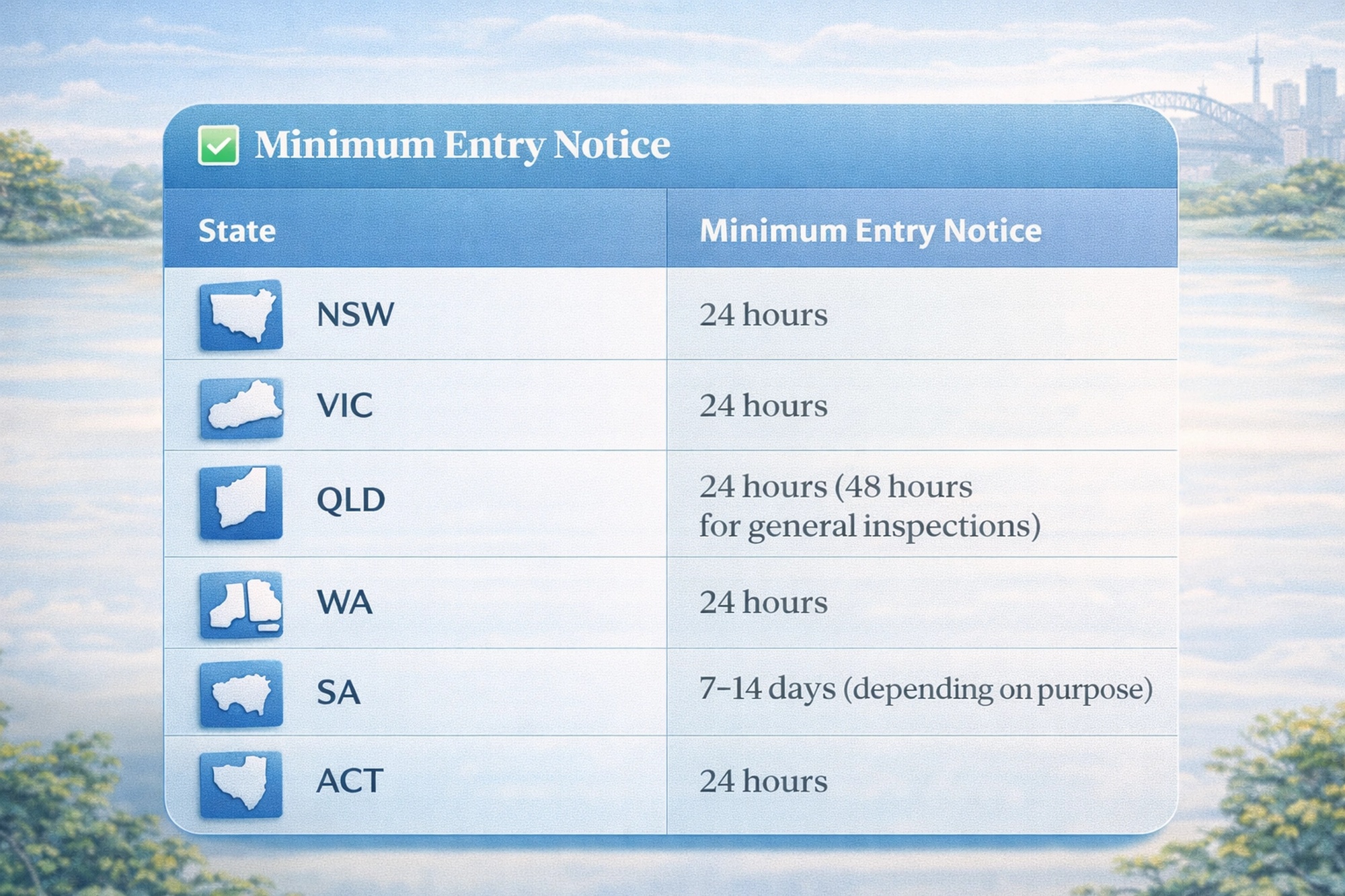
Urgent repairs and emergencies are the only exceptions where landlords may enter without notice.
✅ Right to Protection from No-Grounds Eviction (NSW — Major 2025 Update)
New South Wales enacted landmark tenancy law reforms that took effect on 19 May 2025. Under the Residential Tenancies Amendment Act 2024, landlords in NSW can no longer terminate a tenancy without providing a valid legal reason — for both periodic and fixed-term leases. This ended the previous "no grounds" eviction regime that allowed landlords to evict tenants without explanation. Valid grounds include breach of lease, the landlord needing the property for personal use, or significant renovations.
This is a significant protection for migrants and all NSW renters, ending the previous system where a landlord could effectively evict a tenant with just 90 days' notice for no stated reason.
✅ Right to Dispute Bond Claims
If a landlord claims your bond at the end of your tenancy and you disagree, you have the right to dispute the claim through your state's bond authority and — if unresolved — through the relevant tenancy tribunal:
- NSW: NSW Civil and Administrative Tribunal (NCAT)
- VIC: Rental Dispute Resolution Victoria (RDRV) — from November 2025 — and VCAT for unresolved disputes
- QLD: Queensland Civil and Administrative Tribunal (QCAT)
- WA: Magistrates Court of Western Australia
- SA: South Australian Civil and Administrative Tribunal (SACAT)
SettleMate's Tip: SettleMate recommends every renter — regardless of which state they live in — look up their state's tenancy authority website within their first week of renting. Understanding your specific rights in advance of a dispute is far more effective than trying to learn them in the middle of one. Key contacts: NSW Fair Trading (nsw.gov.au/housing), Consumer Affairs Victoria (consumer.vic.gov.au), RTA Queensland (rta.qld.gov.au), Consumer Protection WA (commerce.wa.gov.au), Consumer and Business Services SA (cbs.sa.gov.au).
📈 STEP 10: Rent Increases — The Rules Every Renter Must Know
💡 How and When Your Rent Can Increase
Rent increases in Australia are governed by state law and have been significantly reformed in recent years. Here is what you need to know:
✅ How Often Can Rent Be Increased?
All major states now limit rent increases to once every 12 months for most tenancies. NSW introduced this limit from 31 October 2024. This means:
- Rent cannot be increased within the first 12 months of your tenancy
- After any increase, the landlord must wait at least 12 months before increasing again
- This limit applies to both fixed-term and periodic leases in most states
- Renewing a lease or switching lease type does not reset the 12-month clock in NSW
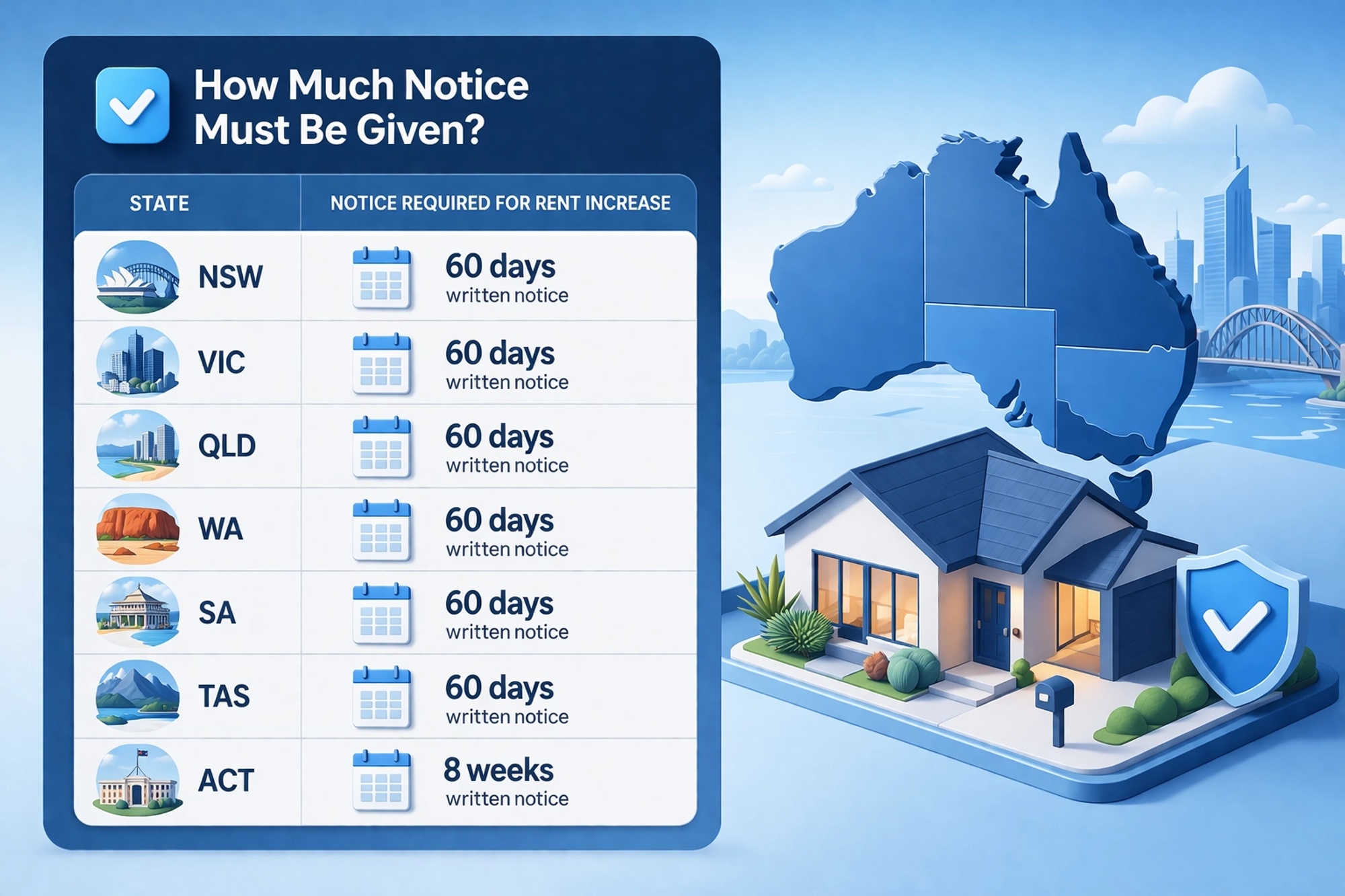
The notice must be in writing. A verbal rent increase is not valid in any Australian state. If you do not receive 60 days' written notice, you are not legally required to pay the increased amount.
✅ Can You Challenge an Excessive Rent Increase?
Yes. In most states, if you believe a rent increase is excessive relative to market rent for comparable properties in the area, you can apply to your state's tenancy tribunal to challenge it. Collecting comparable rental listings from realestate.com.au or Domain for similar properties in the same suburb is good evidence to support a challenge.
SettleMate's Tip: SettleMate recommends keeping a record of when your tenancy started and when any rent increase was implemented. If a landlord or agent attempts to increase your rent within the first 12 months, or within 12 months of a previous increase, you are within your rights to refuse it — and should do so in writing, citing your state's tenancy legislation. Contact your state's tenancy authority if you need support.
💔 STEP 11: Breaking a Lease Early — What It Costs
⚠️ The Financial Reality of Breaking a Lease
Breaking a fixed-term lease before the end date is possible in Australia — but it comes with financial consequences. Understanding these before you sign is important.
When you break a lease early, you may be liable for:
1. Reletting costs (advertising fees): The cost of re-advertising and finding a new tenant. This is typically one to two weeks' rent.
2. Rent until a new tenant is found: You continue to owe rent until the landlord finds a replacement tenant or your original lease ends — whichever is earlier. The landlord has a legal obligation to actively seek a new tenant (called "mitigating their loss") and cannot simply leave the property empty and charge you full rent for the remainder of the lease.
3. Lease-break fee (in some states): Queensland limits reletting costs based on how much time is left on the lease — the shorter the remaining term, the lower the fee. Other states have similar proportionality principles.
Important exceptions: You may be able to break a lease without financial penalty in certain circumstances, including:
- The property has been rendered uninhabitable
- The landlord has breached their obligations (e.g. refusing urgent repairs)
- You are experiencing family or domestic violence (all states have protections for this)
If you need to break your lease, give written notice as early as possible, actively help the landlord find a replacement tenant by sharing the listing, and negotiate directly with the agent about costs.
🧹 STEP 12: Moving Out — How to Get Your Full Bond Back
✅ The End-of-Tenancy Process
Getting your full bond back requires preparation. Here is the process:
Step 1: Give correct written notice of your intention to vacate. The required notice period varies by state and lease type — typically 14–28 days for a periodic lease, or at least 14 days at the end of a fixed-term lease.
Step 2: In the final days before vacating, clean the property thoroughly — every room, every appliance, every bathroom and kitchen surface.
Step 3: Compare the property's condition to your move-in condition report and photos. Address anything that has deteriorated beyond fair wear and tear during your tenancy.
Step 4: Arrange a final inspection with the property manager, if possible. Attend this inspection yourself so you can hear any concerns raised directly and address them before handing back the keys.
Step 5: Return all keys, remotes, and parking passes.
Step 6: Submit a bond refund claim through your state's bond authority online portal — Rental Bonds Online (NSW), RTBA Online (VIC), RTA Web Services (QLD), etc.
Step 7: If the landlord makes a claim on your bond that you disagree with, you have the right to dispute it. Contact your state's tenancy authority for guidance.
Normal wear and tear is not deductible. Carpet that is worn from regular use, small marks on walls, slightly faded paint — these are fair wear and tear. Stains, holes, broken fixtures, or significant damage caused by you are deductible. The distinction matters enormously and is regularly disputed.
SettleMate's Tip: SettleMate recommends never signing a blank or partially completed bond refund form, and never agreeing verbally to a bond deduction without getting the amount confirmed in writing first. If your landlord claims $800 for cleaning but you left the property clean and have photos to prove it, dispute the claim through your state's bond authority. The process is free, and you are entitled to contest any claim you believe is unreasonable.
🚨 STEP 13: Rental Scams — The Red Flags That Target Migrants
⚠️ How to Identify a Scam Before It Costs You

Rental scams in Australia specifically target migrants and new arrivals who are unfamiliar with the local market, are searching remotely, and may be under time pressure to secure accommodation. Scambuster Australia recorded over 2,300 rental fraud cases in 2024–25, with victims losing an average of $3,200 each.
🚩 Red Flags — Walk Away If You See Any of These
The price is significantly below market rate. If a 2-bedroom apartment in inner Sydney is listed at $400/week when comparable properties are $750/week, it is almost certainly a scam. Research median rents on Domain or realestate.com.au for your target suburb before attending any inspection.
The landlord refuses an in-person inspection. There is no legitimate reason a landlord cannot allow you to physically inspect a property before signing a lease. "I'm overseas," "The current tenants won't allow it," and "You can do a video walkthrough" are common scammer excuses. If you cannot inspect in person, do not pay anything.
You are asked to pay before signing a lease. No legitimate landlord requires you to pay a bond or advance rent before a lease is signed and you have received keys. Never transfer money before the lease is fully executed.
The payment method is unusual. Legitimate rental payments go to an Australian bank account registered to a licensed real estate agency or a verifiable private landlord. Never pay via cryptocurrency, gift cards, wire transfer to an overseas account, or any payment method that cannot be traced or reversed.
The landlord pressures you to decide immediately. Urgency is a scammer's tool. "I have 10 other applicants" or "You must pay today or lose it" is designed to stop you thinking clearly. Legitimate landlords have a screening process that takes time.
The listing appears on multiple platforms with different contact details. Scammers copy legitimate property photos and descriptions and re-post them with their own contact information. Do a reverse image search on the property photos and Google the exact description text to check for duplicates.
The bond is not being lodged with a government authority. Your bond goes to the state bond authority — not to a "bond holding account" operated by the landlord.
✅ How to Verify a Legitimate Listing
- Search the property address on realestate.com.au and Domain to see if it is also listed through a registered agency
- Verify that the agent holds a valid licence through your state's real estate regulator (e.g. NSW Fair Trading licence search at licence.nsw.gov.au)
- Do a title search on the property (costs around $10 through your state's land titles office) to confirm ownership if dealing with a private landlord
- Never pay cash — always pay by bank transfer to a traceable Australian account
SettleMate's Tip: SettleMate's absolute rule for every new migrant: if you cannot physically inspect a rental property in person before paying any money — do not pay any money. No exceptions. The Australian rental market is competitive and stressful, and the pressure to secure something quickly is real. But no amount of urgency justifies transferring a bond and advance rent to someone you cannot verify. Every genuine landlord and agent will accommodate a proper inspection.
🏡 STEP 14: Share Houses — A Practical First Step
🤝 How Share Houses Work for New Arrivals
Share houses are the most practical first accommodation option for most migrants, particularly in Sydney, Melbourne, and Brisbane where private rental costs are very high. Here is how they work.
Finding a share house: Flatmates.com.au is the primary platform. Create a profile with a photo, a brief description of yourself, your lifestyle (quiet, sociable, work hours), and your budget. Browse available rooms, send messages to housemates, and arrange to view the room.
What to check at a share house viewing:
- Is the room a comfortable size for your needs?
- What is included — bed, desk, wardrobe, internet?
- How many people share the bathroom and kitchen?
- Are bills included in the rent, or split separately?
- What is the house dynamic — quiet weeknights or social atmosphere?
- What is the lease arrangement — are you going on the main lease or subletting from a head tenant?
The lease distinction matters. If you are a named co-tenant on the main lease, you have full tenant rights. If you are subletting from a head tenant (the more common arrangement in shared housing), your rights are somewhat different — you are subject to the head tenant's rules and they can ask you to leave with shorter notice in some cases. Understand which arrangement applies before you move in.
Bills in share houses: Internet, electricity, and gas are commonly split equally among housemates. Agree on how bills will be managed and paid before moving in — verbal agreements about money cause the most conflict in share house situations.
💡 Money-Saving Tips for Renting in Australia
- Consider suburbs one train stop further from the CBD — rents typically drop significantly once you are 30+ minutes from the city centre while still having good transport
- Furnished share houses eliminate the need to buy furniture — a saving of $2,000–$5,000 for a new arrival
- Always compare private rental and share house upfront costs before committing — a share house with a $1,500 bond is significantly more accessible than a private rental requiring $6,000+
- Ask about internet inclusions — in competitive markets, landlords offering included NBN internet effectively reduce your out-of-pocket monthly costs by $60–$90
- Set up realestate.com.au alerts for your exact target criteria — speed of application matters more than any other single factor in a competitive market
- Keep receipts for all professional cleaning you commission before moving out — they are evidence that you left the property clean and are deductible if the landlord makes a cleaning claim
📌 Official & Trusted Resources
This guide is informed by:
- NSW Fair Trading — nsw.gov.au/housing-and-construction/renting
- Consumer Affairs Victoria — consumer.vic.gov.au/housing/renting
- Residential Tenancies Authority Queensland — rta.qld.gov.au
- Consumer Protection WA — commerce.wa.gov.au/consumer-protection
- Consumer and Business Services SA — cbs.sa.gov.au
- Tenants Victoria — tenantsvic.org.au
- Tenants' Union of NSW — tenants.org.au
- Domain Rental Report Q3–Q4 2025 — domain.com.au
Disclaimer
This guide is provided for general informational purposes only. While SettleMate strives to keep all information accurate and up to date, tenancy laws, bond regulations, and processes may change and can vary significantly by state and territory. This content does not constitute legal, migration, or financial advice. SettleMate is not a registered migration agent or legal practitioner. Always verify important details through your state's official tenancy authority or seek advice from a qualified professional, including a tenant advice service, for your specific situation.
Sharing & Usage
This guide is original content created by SettleMate. You are welcome to share, link to, or quote this guide for personal, educational, or non-commercial purposes, provided SettleMate is clearly credited as the source.
© SettleMate. All rights reserved. settlemate.au
Made with ❤️ for immigrants in Australia
Can I rent in Australia without an Australian rental history?
Yes — many migrants successfully rent without Australian rental history by providing strong financial evidence, employment or university documentation, international rental references translated into English, and in some cases offering additional rent in advance. The guide above covers how to build the strongest possible application.
How much money do I need upfront to rent in Australia?
At minimum, budget for 4 weeks' bond + 2 weeks' rent in advance + moving costs + utility connections. For a $600/week property this is approximately $3,600 in bond and advance rent plus $300–$800 in moving costs. In Sydney, expect total upfront costs of $5,000–$7,000 for a typical unit.
Can I break a lease early?
Yes, but there are financial consequences — typically advertising costs and rent until a new tenant is found. The landlord must actively seek a new tenant and cannot simply charge you rent for the remainder of the lease without effort. Some circumstances (domestic violence, uninhabitable property, landlord breach) allow you to break a lease without financial penalty.
I think I'm being scammed by a landlord. What do I do?
Do not pay anything further. Report the listing to the platform it appeared on (realestate.com.au, Gumtree, Facebook). Report to Scamwatch at scamwatch.gov.au. If you have already lost money, contact your bank immediately to attempt a transaction reversal, and file a police report.
Is renting in a share house safe and legal?
Yes. Share houses are a completely standard and legal form of accommodation in Australia used by millions of renters. The key is understanding whether you are a co-tenant on the main lease or a subtenant (subletting from a head tenant) — as this affects your legal rights. Flatmates.com.au is the most reputable platform for finding share house rooms.
Let's chat like humans, not forms
Answer a few quick questions and we'll route your note to a certified expert, no matter where you are in the world.
SettleMate Response Promise
Every conversation is reviewed by a specialist within 24 hours (often much sooner), and you'll always get a personalised next step.
- Thoughtfully reviewed by a real specialist.
- Personalized replies tailored to your unique situation.
- Actionable next steps, delivered clearly after each consultation.
Need something faster?
Reach us directly
Prefer a quick reply? Use any of the touchpoints below and our concierge team will jump in.